- Product Detail
- Product Tags
There are a lot of volatile components (called oil gas) in the finished oil (gasoline, kerosene, diesel, etc.) or chemical products produced by refineries. During the loading and shipping process, a lot of evaporation loss will occur. The steam produced by evaporation is directly discharged into the atmosphere, which will cause a lot of energy waste and cause harm to the human body. On the other hand, the formation of flammable volatile gases not only poses a serious safety hazard, but also can form photochemical smog under ultraviolet light, causing environmental pollution.
Condensation method
The heat of oil and gas is replaced by refrigeration technology to realize the direct conversion of oil and gas components from gas phase to liquid phase. The condensation method is a method of circulating oil and gas by using the difference in vapor pressure of hydrocarbon substances at different temperatures, cooling down to make some hydrocarbon vapor pressure in oil and gas reach supersaturated state, condensing supersaturated vapor into liquid state. Generally, a multi-stage continuous cooling method is used to reduce the temperature of oil and gas, so that it condenses into liquid and circulates back. The low temperature of the condensing device is determined according to the composition of volatile gas, the required rate and the concentration limit of organic compounds in the tail gas discharged into the atmosphere. Generally, it is realized by precooling, mechanical refrigeration and other steps. The precooler is a single-stage cooling device. In order to reduce the operating energy consumption of the device, a technology using cold recovery has been developed to reduce the temperature of the gas entering the device from the ambient temperature to about 4°C, so that most of the water vapor in the gas is condensed into water and removed. After leaving the precooler, the gas enters the shallow cooling stage. The gas temperature can be cooled to -30°C to -50°C, and it can be set according to the needs, and nearly half of the hydrocarbon substances in the oil and gas can be recovered. The oil and gas leaving the shallow cooling stage enter the deep cooling stage, which can be cooled to -73℃ to -110℃. The temperature can be set and the compressor can be configured according to different requirements.
Condensation oil and gas technology
The technical principle of the oil and gas condensation process is to use refrigeration engineering methods to displace the heat of oil and gas, so that the temperature of various components of oil and gas is lower than the condensation point and they change from gas to liquid for reuse.
The multi-stage continuous cooling method is used to cool to -73℃, and the typical oil-gas ratio is 90-95%. Condensed to -95℃, the non-methane total hydrocarbon concentration of the outlet gas is ≤35g/m3.
The advantages of condensation oil and gas technology are simple process, good safety performance, and the recovered product is directly oil. The pure condensation oil and gas device developed by single compressor self-cascade refrigeration technology can reduce the oil and gas temperature to -100℃~-120℃. The power consumption of the device in normal working state is only 0.2 (Kw·h)/m3 oil and gas, which is the same as the activated carbon adsorption method.
The key technology of condensing oil and gas processing equipment is mature, the cost is relatively low, the floor space is small, the maintenance is easy, the safety is good, the operating cost is low, and it only consumes electricity and cooling water (air cooling can also be used). The recovery benefit is far greater than the energy consumption expenditure. The processing capacity of pure condensing oil and gas equipment is 5-500m3/h.
Processing
The oil and gas are cooled in three stages to below -100°C, thereby condensing clean hydrocarbon liquid.
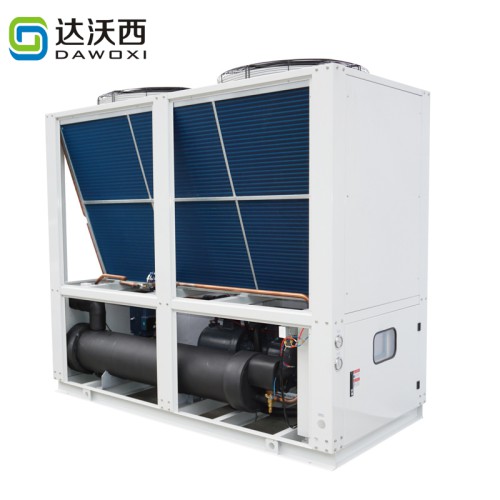
The oil and gas are first cooled to 3-5°C to condense the hydrocarbon recombinants and the water carried in the air, reducing the possibility of frosting in the later stages. In the second stage of refrigeration, the oil and gas are further cooled to -50-65°C, and then cooled to -100-110°C through the third stage of refrigeration. The clean cold air condensed from the three-stage refrigeration is heated to 10°C or higher, and the heat source comes from the heat recovered from the refrigeration system. Defrosting: The water vapor carried in the air entering the device is condensed into liquid in the first stage, and the remaining water vapor will frost in the second stage. . The defrosting liquid of the foreign condensing oil and gas device is preheated by the waste heat of the circulating refrigeration system. When the system runs continuously for 24 hours, two oil and gas condensers are required, one of which is defrosted and the other continues to run. The system automatically defrosts and switches. The pure condensing oil and gas device is designed with a fast defrost system, which completes defrosting within 3-5 minutes. Chiller, industrial chiller, freezer, screw chiller
Performance and indicators
Safety - All components are Ex explosion-proof components; there are no mechanical or electrical components in the oil and gas channels.
Emission concentration - gasoline and naphtha, the exhaust outlet concentration reaches 12g/m3 (national standard GB20952-2007 stipulates: oil and gas emissions reach ≤25g/m3).
Load: Operate at 150% to 180% of the design flow rate. The circulation recovery rate decreases slightly when overloaded. When the design flow rate exceeds 150%, the gasoline circulation recovery rate is 90%.
Summary
The pure condensation explosion-proof oil and gas device utilizes the new single compressor self-cascade refrigeration technology. The oil and gas recovery rate is above 99%, and the emission concentration is below 12g/m3. The condensation temperature should reach -100℃~-120℃. The unit makes full use of the system heat recovery, and the power consumption is 0.2 (Kw·h)/m3 oil and gas, which is the same as the activated carbon adsorption method. The device has high energy consumption and very high cost. A multi-stage condensation oil and gas recovery device includes a first-stage refrigeration system, a second-stage refrigeration system and a third-stage refrigeration system. The first-stage refrigeration system, the second-stage refrigeration system and the third-stage refrigeration system respectively include a first condenser and a first fin evaporator, a second condenser and a second fin evaporator, a third condenser and a third fin evaporator. The first condenser, the second condenser and the third condenser are respectively the first fin condenser, the second fin condenser and the third fin condenser. The first fin condenser, the second fin condenser and the third fin condenser each include a shell, a fin group, a refrigerant pipe and a fin group located under the shell. The shell has a square oil outlet, and the function of the shell is to form a total channel for oil and gas input. The fin group is composed of a number of fins arranged in parallel connected by pipes in sequence. A number of small holes are evenly distributed on the above fins, and the small holes on adjacent fins are staggered. The small holes are used for the passage of oil and gas. The purpose of the staggered distribution of the small holes on adjacent fins is that after passing through the small holes on the fins, the oil and gas will not directly pass through the small holes of the next adjacent fin, but will move horizontally on the next adjacent fin. The horizontally moving oil and gas can fully contact with the fin condenser, and the contact area is increased, so that the oil and gas recovery efficiency is improved.